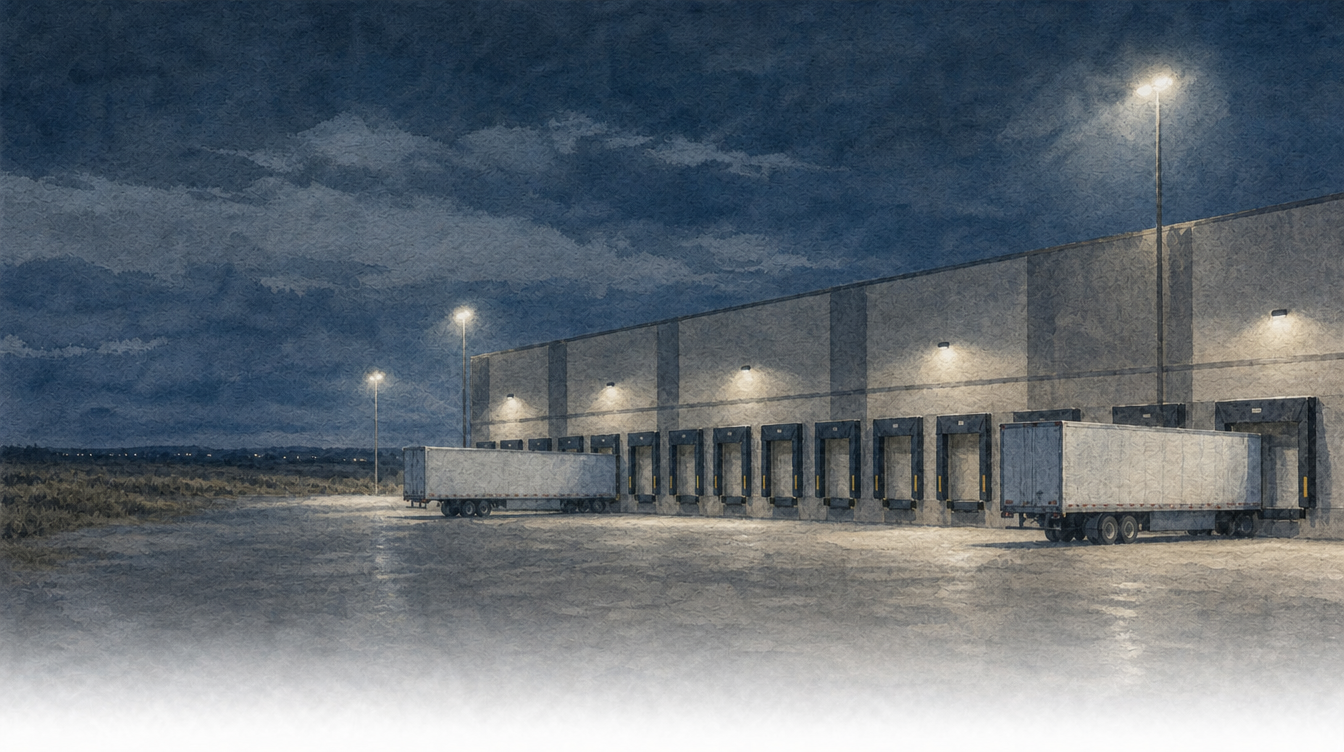
Industry
Warehousing
Every touch of a pallet that nobody planned for costs money.
34%
fewer mis-picks after intake and putaway were rebuilt
Where the hours leak
The patterns we see in almost every operation here.
Inbound paperwork keyed twice, once at the dock and once in the office.
Putaway decided by whoever is on shift rather than by rule.
Cycle counts reconciled in spreadsheets after the fact.
Carrier updates chased by phone one shipment at a time.
What we deploy
The systems that usually pay for themselves first.
Dock intake capture that writes straight into your WMS.
Rule-based putaway and slotting recommendations from real movement data.
Continuous counting with variance alerts rather than annual pain.
Automated carrier tracking with exception-only escalation.
Our approach here
What makes this sector different.
We design for the floor first. If a system cannot be used one-handed with a scanner in the other, it gets worked around, so we build it around the movement rather than the reporting.
Questions we get
Asked in almost every first conversation.
Do we need a new WMS?
Rarely. Most of the gain is in the intake, exception and reporting layers around the one you have.
How is accuracy measured?
Against your own pick, ship and count records, before and after, on the same definitions.
What changes
Hours removed, and hours deliberately left alone.
Today, spent on repetitive work
After the system is running
18hback
per person, per week
10xfaster
on repeatable work
Illustrative figures; actual results depend on volume and starting point.

Book a working session.
Ninety minutes on your operation with people who have already done this work in warehousing. You leave with the first three things worth fixing, whether or not you hire us.